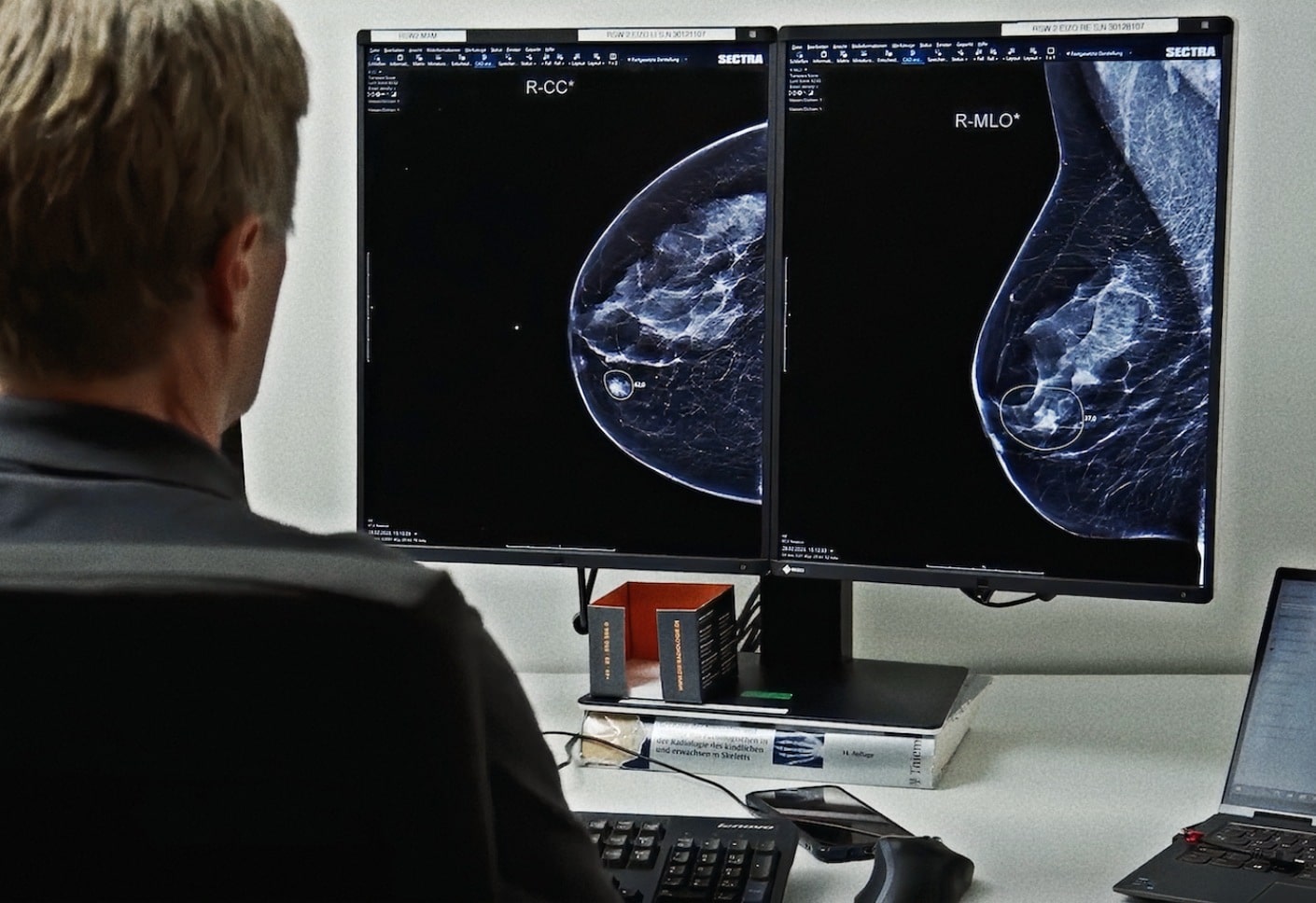
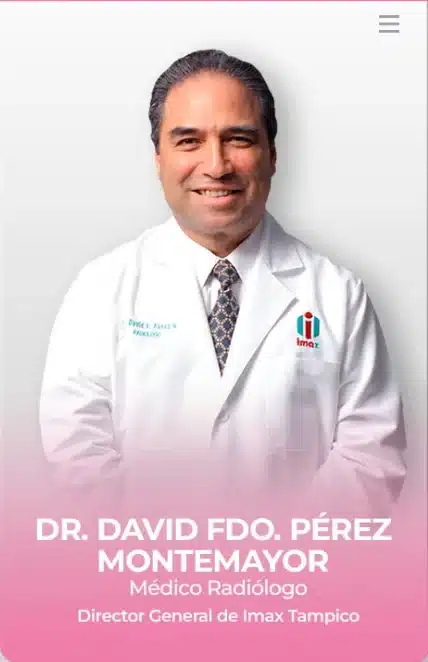
The adoption of artificial intelligence tools is transforming breast imaging practice around the world. In this interview with Diagnóstico Journal, Dr. David Fernando Pérez Montemayor, Director of the IMAX Comprehensive Imaging Center and the VIDA Women's Imaging Center in Mexico, shares his experience using Lunit INSIGHT® MMG, an AI-powered mammography platform, and discusses how this technology improves diagnostic accuracy, optimizes breast cancer screening, and redefines the radiologist's role.
I consider it the perfect coworker. It complements our work, supports us, and helps identify findings that can sometimes go unnoticed due to physical fatigue, heavy workloads, or the inevitable distractions of daily practice.
Artificial intelligence never gets tired. It works consistently using the same criteria and maintains a level of reliability that is extremely valuable. It gives me greater confidence when interpreting studies.
Of course, responsibility for the diagnosis remains with the radiologist. AI does not sign reports and cannot replace our clinical judgment, but every day it becomes a more essential tool in routine practice.
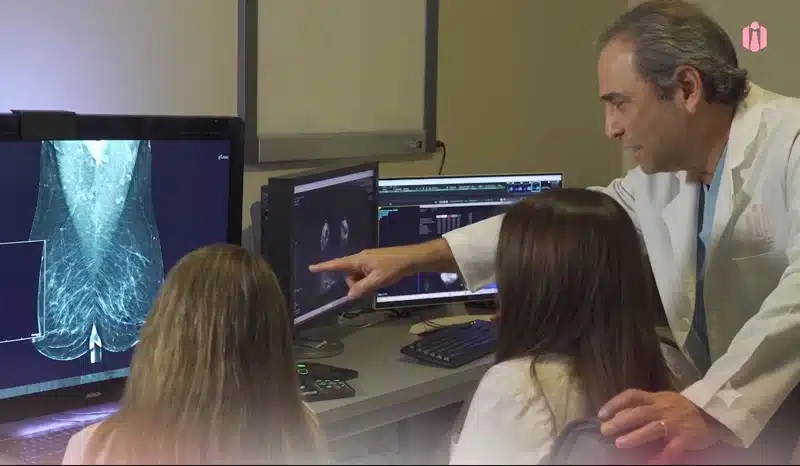
Absolutely. In breast imaging, it is an enormously valuable tool.
Its greatest contribution, in my view, is in patients with dense breasts, who account for approximately 40% of the women we care for*. In these cases, the likelihood of false negatives increases because dense tissue can hide lesions.
AI enables us to identify suspicious areas that are often masked by breast density. When evaluating a patient with dense breasts, a negative ultrasound, and a low abnormality score from Lunit INSIGHT® MMG, I have greater certainty and confidence that no imaging-visible neoplastic lesion is present.¹
We have had several cases where artificial intelligence played a decisive role, but I especially remember a 45-year-old patient who was at high risk of developing breast cancer.
She initially arrived with an ultrasound describing a solid hypoechoic mass in the right breast, classified as BI-RADS 3 and probably a fibroadenoma. However, the image had suspicious characteristics, so we performed a second targeted ultrasound examination and reclassified it as BI-RADS 4B.
Given the patient's age, we ordered a mammogram, which confirmed a lesion with partially obscured margins associated with a cluster of pleomorphic microcalcifications in the right breast. Up to that point, the AI confirmed all of those findings.
However, it also identified a second suspicious region in the left breast that had not been detected initially. We performed a targeted second-look ultrasound and confirmed the lesion. Biopsies were performed on both breasts, and the result was bilateral invasive ductal carcinoma.
In this case, AI had a profound impact because it enabled the early diagnosis of a second tumor that likely would have remained hidden.
The impact is enormous.
First, it significantly reduces the number of studies classified as BI-RADS 0**, especially in patients with dense breasts, who frequently require additional imaging studies.
In addition, many countries in Latin America do not have enough radiologists specialized in breast imaging. In that context, artificial intelligence serves as a support tool that guides us, validates our findings, and accelerates the learning curve.
It is like having an expert radiologist permanently sitting beside you, confirming what caught your attention and pointing out findings that might otherwise go unnoticed.
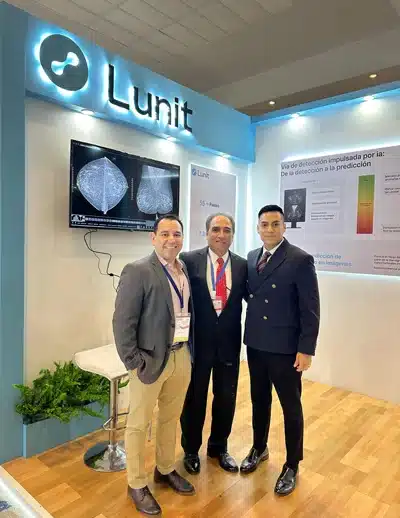
I believe artificial intelligence will ultimately become integrated into all breast imaging modalities.
We will see increasingly advanced tools for ultrasound, contrast-enhanced mammography, and magnetic resonance imaging, with diagnostic capabilities superior to what we have today.
The algorithms will continue to evolve, providing more precise images and better analytical tools.
AI will also reduce the amount of time radiologists spend analyzing studies. That saved time should be devoted to something no technology can replace: interaction with the patient.
Our challenge will be to use that efficiency to deliver better diagnoses while also providing more human-centered care, with greater empathy and a better experience throughout the diagnostic journey.
I am convinced that, in the very near future, artificial intelligence will not replace radiologists. However, those professionals who choose not to use it will be replaced.
Footnotes
* The estimate of approximately 40% is based on Dr. Pérez's clinical experience and patient population.
** The statement regarding BI-RADS 0 reduction is based on the interviewee's clinical experience.
¹ See Disclaimer below.
Disclaimer: This testimonial reflects the experience and opinion of the clinician and may not be representative of all users. The manufacturer has not independently verified the efficiency results described.
Lunit INSIGHT® MMG is a computer-aided detection and diagnosis (CADe/x) software intended to assist healthcare professionals in the detection, localization, and characterization of suspicious breast cancer findings on mammography images. It is intended to support, not replace, the clinical judgment of the interpreting physician. Product availability, indications for use, and regulatory status may vary by country and region across Latin America.